Newgreen Supply Food/Industry Grade Tannase Powder

Product Describtion:
Tannase is an enzyme that can hydrolyze tannic acid (tannic acid) by catalyzing the cleavage of ester bonds and glycosidic bonds in tannic acid molecules to generate gallic acid, glucose and other low molecular weight products. Tannase with an enzyme activity of ≥300 u/g is usually produced by fungi (such as Aspergillus niger, Aspergillus oryzae) or bacterial fermentation, and is extracted and purified to form powder or liquid. It has the characteristics of high efficiency and environmental protection and is widely used in food, beverages, medicine and feed.
Tannase with an enzyme activity of ≥300 u/g is a multifunctional biocatalyst. Its core value lies in the efficient degradation of tannic acid and the release of high value-added products (such as gallic acid). In the fields of food, medicine, feed, environmental protection, etc., it shows significant economic and ecological benefits by improving product quality, reducing production costs and reducing environmental pollution. For example, in tea beverage processing, tannase can reduce the astringency of tea soup by more than 70% while retaining the antioxidant activity of tea polyphenols. With the growing demand for green manufacturing, tannase has broad prospects in replacing traditional chemical processes.
COA:
| Items | Specifications | Results |
| Appearance | Light yellow powder | Complies |
| Odor | Characteristic smell of fermentation odor | Complies |
| Activity of enzyme( Tannase) | ≥300 u/g | Complies |
| PH | 4.5-6.0 | 5.0 |
| Loss on drying | <5 ppm | Complies |
| Pb | <3 ppm | Complies |
| Total Plate Count | <50000 CFU/g | 13000CFU/g |
| E.Coli | Negative | Complies |
| Salmonella | Negative | Complies |
| Insolubility | ≤ 0.1% | Qualified |
| Storage | Stored in air tight poly bags,in cool and dry place | |
| Shelf life | 2 years when properly stored | |
Function:
Efficient Hydrolysis Of Tannic Acid: hydrolyze tannic acid into gallic acid, glucose and ellagic acid, reducing the astringency and bitterness of tannin.
Reaction: Tannic acid + H₂O → Gallic acid + Glucose (or ellagic acid).
Improve Flavor And Taste: remove bitterness in food and beverages and improve product palatability.
pH Adaptability: exhibits optimal activity under weakly acidic to neutral conditions (pH 4.5-6.5).
Temperature Resistance: maintains high activity within a moderate temperature range (usually 40-60℃).
Substrate Specificity: highly selective for hydrolyzing soluble tannins (such as gallic tannins and ellagic tannins).
Application:
1.Food And Beverage Industry
●Tea beverage processing: used to remove bitterness and astringency from green tea, black tea and oolong tea, and improve the color and taste of tea soup.
●Juice and wine production: decompose tannins in fruits and reduce astringency (such as deastringency of persimmon juice and wine).
●Functional food: produce functional ingredients such as gallic acid for antioxidant foods or health products.
2.Pharmaceutical Industry
●Extraction of medicinal ingredients: used to hydrolyze tannic acid to prepare gallic acid as a raw material for antibacterial or anti-inflammatory drugs.
●Chinese medicine preparation: reduce the irritation of tannins in Chinese medicinal materials and improve the bioavailability of effective ingredients.
3.Feed Industry
●As a feed additive, decompose tannins in plant raw materials (such as beans and sorghum) to improve the digestion and absorption rate of feed by animals.
●Reduce the adverse effects of tannins on animal intestines and promote growth performance.
4.Leather Industry
●Used for biodegradation of plant tannins, replacing traditional chemical detanning processes and reducing environmental pollution.
5.Environmental Protection
●Treatment of industrial wastewater containing tannins (such as tanneries and juice factories) to degrade tannin pollutants.
●Decompose plant tannins during composting to accelerate the conversion of organic waste.
6.Cosmetics Industry
●Used in skin care products, using the antioxidant properties of gallic acid to develop anti-aging products.
●Decompose tannins in plant extracts to reduce product irritation.
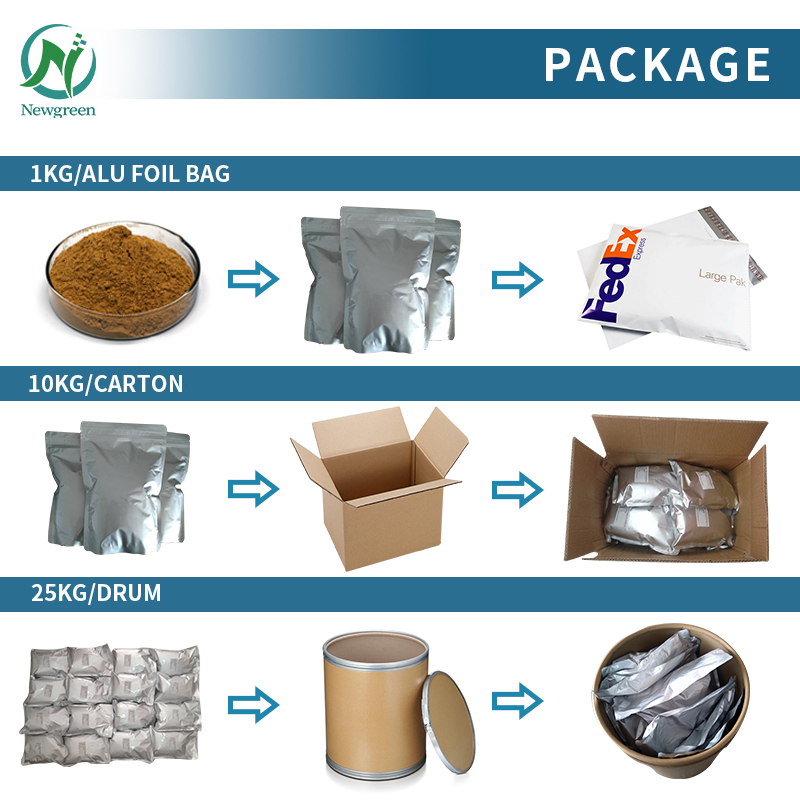
Package & Delivery