Newgreen Supply Food/Industry Grade Enzyme Phospholipase Liquid

Product Describtion:
Phospholipase is a highly active enzyme preparation that can catalyze the hydrolysis of phospholipid molecules to produce fatty acids, glycerol phosphates and other derivatives. According to their different action sites, phospholipases can be divided into many types, such as phospholipase A1, A2, C and D. These enzymes are widely found in animals, plants and microorganisms. They are produced by microbial fermentation technology and are extracted and purified to form high-purity powder or liquid forms suitable for industrial applications.
Phospholipase with enzyme activity ≥100,000 u/g is an efficient and multifunctional enzyme preparation widely used in food, feed, medicine, cosmetics, biotechnology, detergents and environmental protection. Its high activity and specificity make it a key enzyme for phospholipid modification and degradation, with important economic and ecological benefits.
COA:
| Items | Specifications | Results |
| Appearance | Light yellow liquid | Complies |
| Odor | Characteristic smell of fermentation odor | Complies |
| Activity of enzyme( Phospholipase) | ≥10,000 u/g | Complies |
| PH | 5.0-6.5 | 6.0 |
| Loss on drying | <5 ppm | Complies |
| Pb | <3 ppm | Complies |
| Total Plate Count | <50000 CFU/g | 13000CFU/g |
| E.Coli | Negative | Complies |
| Salmonella | Negative | Complies |
| Insolubility | ≤ 0.1% | Qualified |
| Storage | Stored in air tight poly bags,in cool and dry place | |
| Shelf life | 2 years when properly stored | |
Function:
Efficient Catalytic Phospholipid Hydrolysis:
1.Phospholipase A1/A2: hydrolyze the ester bond at the Sn-1 or Sn-2 position of phospholipids to generate free fatty acids and lysophospholipids.
2.Phospholipase C: hydrolyze the glycerophosphate bond of phospholipids to generate diacylglycerol and phosphate esters.
3.Phospholipase D: hydrolyze the phosphate bond of phospholipids to generate phosphatidic acid and alcohols.
Improved Emulsification Performance: by modifying the phospholipid structure, the emulsification and stability are improved.
High Specificity: highly selective for different phospholipid substrates (such as lecithin, cephalin).
Thermotolerance: maintain high activity in a moderate temperature range (usually 40-60℃).
Ph Adaptability: depending on the type, the best activity is shown under weakly acidic to neutral conditions (pH 4.0-8.0).
Application:
Food Industry:
1.Baking industry: used to improve dough properties, strengthen gluten network, and increase bread volume and texture.
2.Dairy processing: used to modify milk fat globule membrane, improve the texture and flavor of products such as cheese and butter.
3.Oil refining: used in degumming process to remove phospholipids from vegetable oils and improve oil quality.
4.Functional food: used to produce functional ingredients such as lysophospholipids to enhance the nutritional value of food.
Feed Industry:
1.As a feed additive, it is used to improve the digestion and absorption rate of phospholipids by animals and promote growth.
2.Improve feed energy utilization and enhance animal health.
Pharmaceutical Industry:
1.Used in drug carrier development, such as the preparation and modification of liposomes.
2.In biopharmaceuticals, it is used for the synthesis and modification of phospholipid drugs.
Cosmetics Industry:
1.Used in skin care products to improve emulsification properties and enhance product stability and absorbability.
2.As an active ingredient, it is used to develop anti-aging and moisturizing products.
Biotechnology Research:
1.Used in the study of phospholipid metabolism mechanism and optimize the production and application of phospholipases.
2.In enzyme engineering, it is used to develop new phospholipases and their derivatives.
Detergent Industry:
As a detergent additive, it is used to decompose grease stains and improve washing effects.
Environmental Protection:
1.It is used to treat industrial wastewater containing phospholipids and degrade organic pollutants.
2.In biodiesel production, it is used to catalyze the hydrolysis of phospholipids and improve the utilization rate of raw materials.
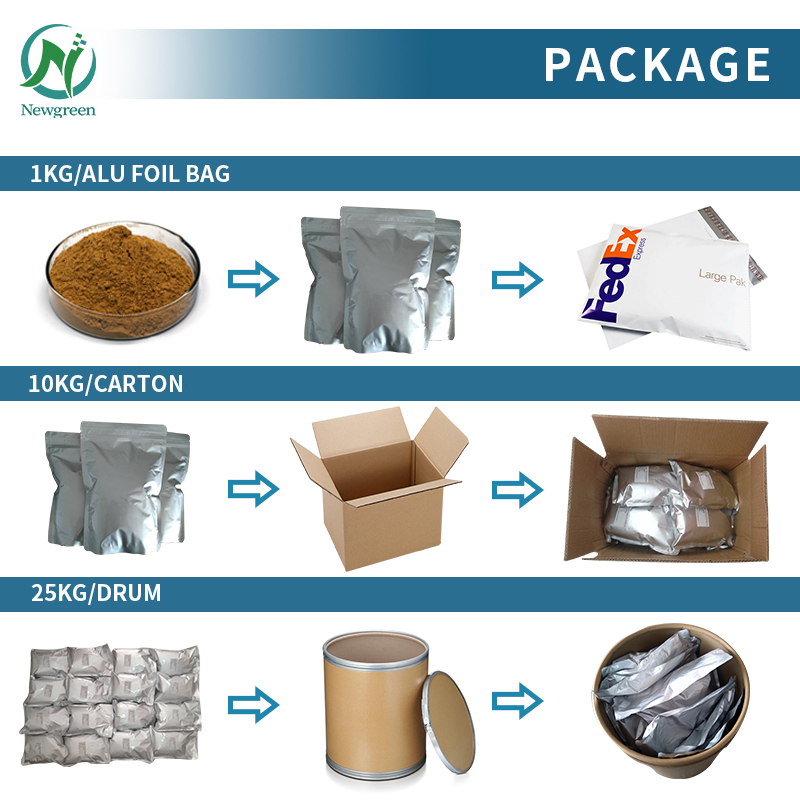
Package & Delivery