Newgreen Supply Enzyme Phytase Liquid With Best Price

Product Description
Liquid phytase with an enzyme activity of ≥10,000 u/ml is a highly active enzyme preparation specifically used to catalyze the hydrolysis of phytic acid (inositol hexaphosphate) to generate inositol and inorganic phosphates. It is produced by microbial fermentation technology, extracted and purified into liquid form, with high concentration and high stability, suitable for industrial applications.
It is a highly efficient enzyme preparation, widely used in feed, food, agriculture, biotechnology and environmental protection. Its high activity and environmental protection make it an important tool for improving nutrient utilization and reducing environmental pollution, with significant economic and ecological benefits.
COA
| Items | Specifications | Results |
| Appearance | Free flowing of the light yellow solid powder | Complies |
| Odor | Characteristic smell of fermentation odor | Complies |
| Activity of enzyme
(Phytase) |
≥10,000 u/ml | Complies |
| PH | 4.5-6.5 | 6.0 |
| Loss on drying | <5 ppm | Complies |
| Pb | <3 ppm | Complies |
| Total Plate Count | <50000 CFU/g | 13000CFU/g |
| E.Coli | Negative | Complies |
| Salmonella | Negative | Complies |
| Insolubility | ≤ 0.1% | Qualified |
| Storage | Stored in air tight poly bags,in cool and dry place | |
| Shelf life | 2 years when properly stored | |
Function
Efficient Catalysis Of Phytic Acid Hydrolysis: decomposition of phytic acid into inositol and inorganic phosphates, release of nutrients chelated by phytic acid (such as phosphorus, calcium, magnesium, etc.).
Improve Nutrient Utilization: reduce the anti-nutritional effect of phytic acid on minerals and proteins, and improve the nutritional value of feed and food.
Temperature Resistance: maintain high activity within a moderate temperature range (usually 40-60℃).
Ph Adaptability: best activity under weakly acidic to neutral conditions (pH 4.5-6.0).
Environmental Protection: reduce the emission of phosphorus in animal feces and reduce environmental pollution.
Applications
Feed Industry:
- As a feed additive, it is used in monogastric animals (such as pigs and poultry) and aquatic feed to improve the utilization rate of phytic acid phosphorus and reduce the addition of inorganic phosphorus.
- It improves the animal's absorption of minerals (such as calcium, zinc, iron) and protein and promotes animal growth.
- It reduces phosphorus emissions in feces and reduces environmental pollution.
Food Industry:
- It is used in the processing of foods with high phytic acid content such as grains and beans to decompose phytic acid and improve the bioavailability of minerals.
- In baked foods, it improves dough fermentation performance and product texture.
Agriculture:
- As a soil conditioner, it is used to decompose phytic acid in the soil, release phosphorus, and improve soil fertility.
- Added in organic fertilizers, it promotes plant absorption of phosphorus.
Biotechnology Research:
- It is used to study the degradation mechanism of phytic acid and optimize the production and application of phytase.
- In the development of functional foods, it is used to improve the nutritional value of food.
Environmental Protection Field:
- It is used to treat industrial wastewater containing phytic acid and reduce phosphorus pollution.
- In organic waste treatment, it is used to decompose phytic acid and increase the fertilizer value of the waste.
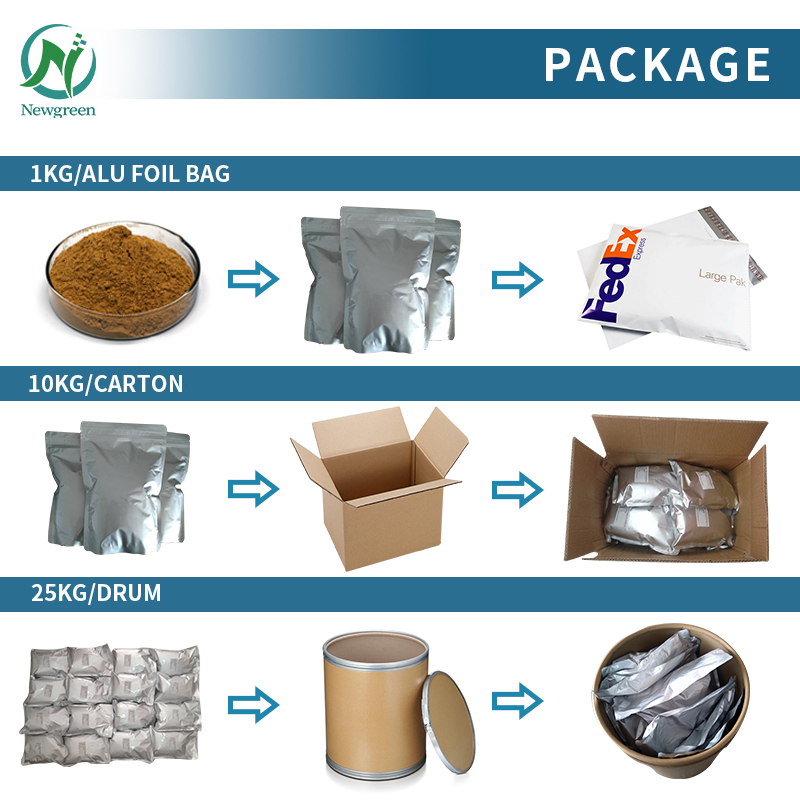
Package & Delivery