

Have you ever wondered: What is Yeast Peptone? What is the function of yeast peptone? What is the difference between Yeast Peptone and Yeast Extract? Why should you use Yeast Peptone? Is Yeast Peptone animal-derived?
These are some of the most frequently-asked questions from biotech, probiotic and fermentation manufacturers around the world. As the global fermentation industry keeps pursuing safer, traceable and religion-compliant culture medium raw materials, yeast peptone has gained growing attention as a promising alternative to traditional animal-sourced peptone. Let’s dive deeper into this popular fermentation nitrogen-source raw material.
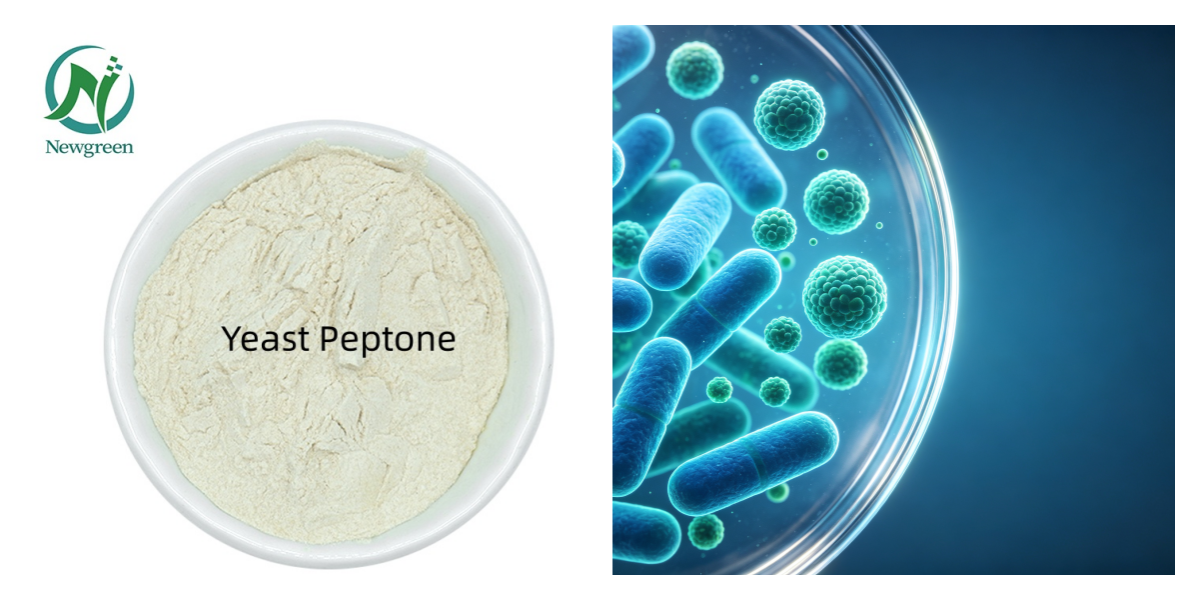
Yeast Peptone is an animal-free complex organic nitrogen source produced from baker’s yeast (Saccharomyces cerevisiae). It is manufactured through controlled enzymatic hydrolysis, filtration, concentration and spray-drying processes. Rich in short-chain peptides, free amino acids, B-complex vitamins, nucleotides and trace minerals, it provides balanced nutrition for microorganisms and is widely used in microbial culture and industrial fermentation.
As an excellent complex organic nitrogen source, yeast peptone provides abundant short-chain peptides, free amino acids, vitamins and trace elements. Yeast peptone accelerates microbial proliferation, increases bacterial biomass and improves the yield of target metabolic products.
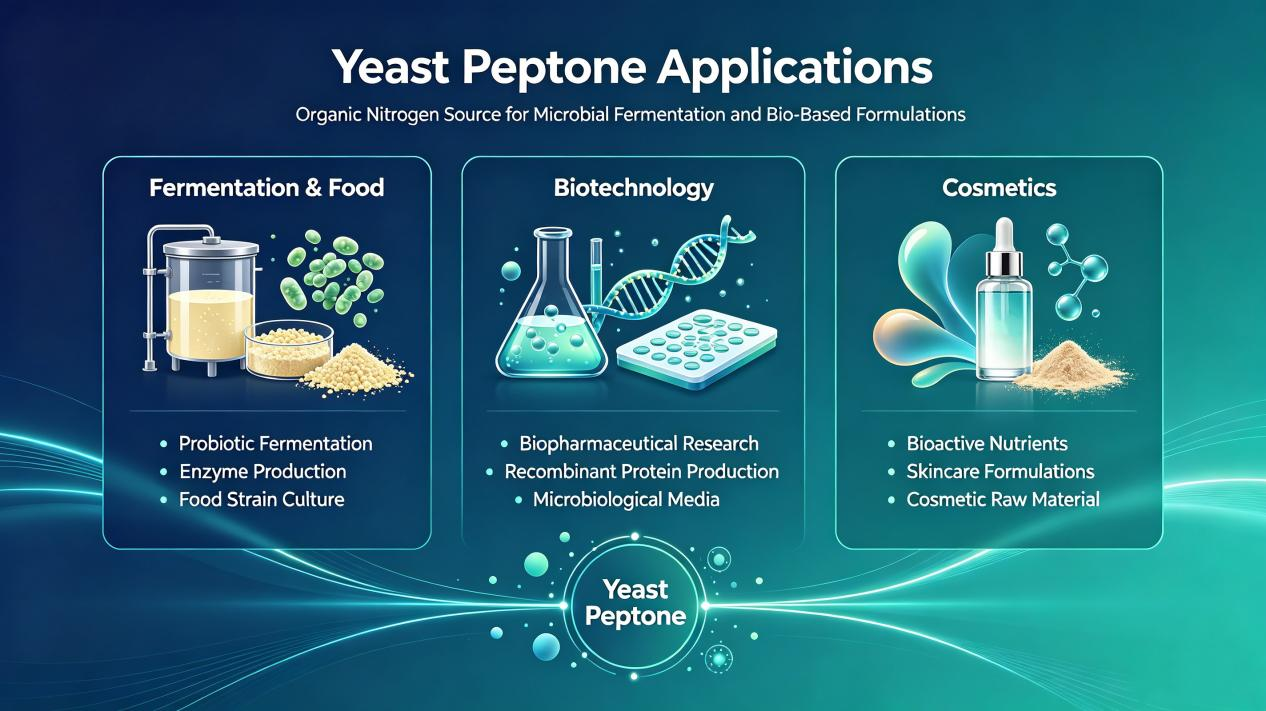
Yeast peptone covers a wide range of application fields. In the fermentation and food industry, yeast peptone is used for probiotic fermentation, enzyme preparation, food strain cultivation and biological culture media. Within the biotechnology sector, yeast peptone finds application in biopharmaceutical research and recombinant-protein production. In the cosmetic industry, yeast peptone acts as a skincare raw material to supply bio-active nutrients for cosmetic formulations.
Yeast peptone and yeast extract are often confused, but they serve very different purposes. Yeast extract is produced by breaking down whole yeast cells to release all soluble components, creating a complex concentrate prized for its umami flavor and widely used in food seasonings. Yeast peptone, on the other hand, is made through targeted enzymatic hydrolysis of yeast proteins, yielding a rich source of peptides and amino acids designed specifically as a digestible nitrogen source for microbial fermentation. Yeast extract is about taste, while yeast peptone is about growth and productivity.
Yeast peptone is 100% non-animal-origin, derived entirely from baker’s yeast (Saccharomyces cerevisiae), making it free from pathogens, allergens, and GMO concerns, while fully compliant with halal, kosher, and vegetarian standards. Why choose it? Because it delivers superior fermentation performance—its rich mix of peptides, amino acids, B-vitamins, and minerals fuels faster microbial growth, higher cell densities, and improved yields of biopharmaceuticals, probiotics, and enzymes. Plus, its controlled production ensures excellent batch-to-batch consistency, and its lower carbon footprint aligns with sustainability goals.
In short, yeast peptone is not only animal-free but also a smarter, safer, and more efficient choice for modern bioprocessing.
For more info, plz contact:
Name: Cassie Huang
Tel/whatsapp: +8613008408548
email: lucy@lfherb.com
Post time: Sep-10-2026