


• What Is Streptococcus Thermophilus ?
In the long history of human domestication of microorganisms, Streptococcus thermophilus has become a cornerstone species of the dairy industry with its unique heat resistance and metabolic capacity. In 2025, the latest research results of the Chinese Academy of Food Fermentation Industries and the International Dairy Federation (IDF) confirmed its independent species status at the genome level for the first time, marking a new stage in the scientific understanding of this “liquid gold”. As a core strain of fermented dairy products with an annual output of more than 30 million tons worldwide, Streptococcus thermophilus is breaking through traditional boundaries and setting off a wave of innovation in functional foods, medical health and other fields.
Streptococcus thermophilus was first named by Orla-Jensen in 1919. After the controversy of subspecies downgrading in 1984 and species restoration in 1991, it finally established its independent species status through whole genome sequencing (ANI ≥ 96.5%, dDDH ≥ 70%) in 2025. China, the European Union, the US FDA and IDF have all listed it as a safe food strain (GRAS). In 2025, the fifth edition of the IDF “List of Bacteria for Fermented Foods” will complete the standard update.
Streptococcus thermophilus is Gram-positive, non-spore-forming, facultative anaerobic, with an optimal growth temperature of 45-50°C, a pH tolerance range of 3.5-8.5, and strong heat resistance (survival rate > 80% after 85°C treatment for 30 minutes).
• What Are The Benefits Of Streptococcus Thermophilus ?
Based on more than 2,000 studies worldwide, Streptococcus thermophilus demonstrates multi-dimensional health value:
1. Intestinal Health Management
Bacterial flora regulation: Inhibit pathogenic bacteria by secreting bacteriocins (such as Salivaricin), increasing the abundance of intestinal bifidobacteria by 2-3 times.
Mucosal repair: Upregulate the expression of the Gal3ST2 gene, reduce the fucosylation of colonic mucin, and relieve chemotherapy-induced intestinal mucosal inflammation.
2. Metabolic Regulation
Blood sugar control: Heat-killed bacterial intervention can reduce fasting blood sugar in diabetic rats by 23% and improve insulin sensitivity (HOMA-IR index decreased by 41%).
Cholesterol metabolism: Streptococcus thermophilus inhibit HMG-CoA reductase activity, reduce serum LDL-C by 8.4%, and increase HDL-C levels.
3. Immunity Enhancement
Cytokine regulation: Stimulate IL-10 secretion (concentration increased by 1.8 times), inhibit TNF-α (decreased by 52%), and relieve chronic inflammation.
Mucosal barrier strengthening: Promotes the expression of tight junction proteins (ZO-1, Occludin) and reduces intestinal permeability (FITC-dextran permeability decreased by 37%).
4. Anti-Cancer Potential
Colorectal cancer inhibition: Degrades carcinogens through the β-galactosidase pathway, reducing the tumor incidence in Apcmin/+ mice by 58%.
Apoptosis induction: Activates the Caspase-3 pathway, inducing a 4.3-fold increase in the apoptosis rate of HT-29 colon cancer cells.
• What Are The Application Of Streptococcus Thermophilus ?
Streptococcus thermophilus is breaking through traditional boundaries and forming a diversified application matrix:
1. Dairy Industry
Yogurt/cheese: compounded with Lactobacillus bulgaricus, shortening the coagulation time to 4 hours and increasing the product yield by 15%.
Low-sugar/low-fat products: Through EPS synthesis technology, the hardness of low-fat cheese is increased by 2 times to simulate the full-fat texture.
2. Functional Food
Sugar-controlled food: breakfast cereals with 5% bacterial powder can delay the postprandial blood sugar peak by 1.5 hours.
Immunoenhancer: Streptococcus thermophilus compounded with oligofructose, the respiratory tract infection rate in children decreased by 33%.
3. Medical Health
Special medical food: used for enteral nutrition preparations to improve the nutritional status of chemotherapy patients (albumin increased by 1.2 g/dL).
Probiotic drugs: combined with bifidobacteria to develop IBS treatment tablets, with a bloating relief rate of 78%.
4. Agriculture And Environmental Protection
Feed additives: Reduce piglet diarrhea rate by 42% and increase feed conversion rate by 11%.
Wastewater treatment: Degrade COD of dairy wastewater by 65% and reduce sludge production by 30%.
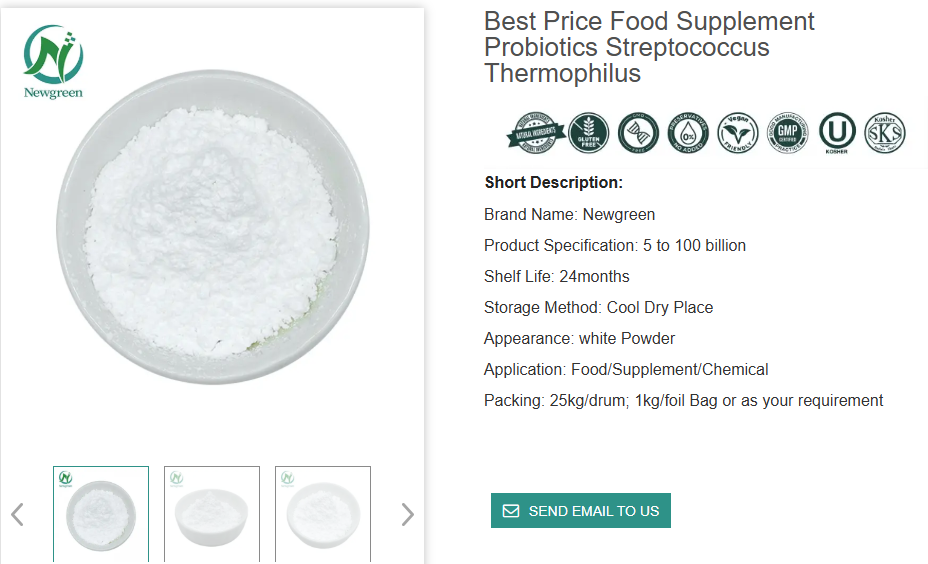
• Newgreen Supply High Quality Streptococcus Thermophilus Powder
Post time: Jul-28-2025


