

Squalane: the “Biomimetic Skin‑Friendly Lipid”
You may have come across the term “squalane” in beauty and personal‑care discussions in recent years. But what exactly is squalane? What role does it play in our skin health? Let’s take a closer look at this popular compound.
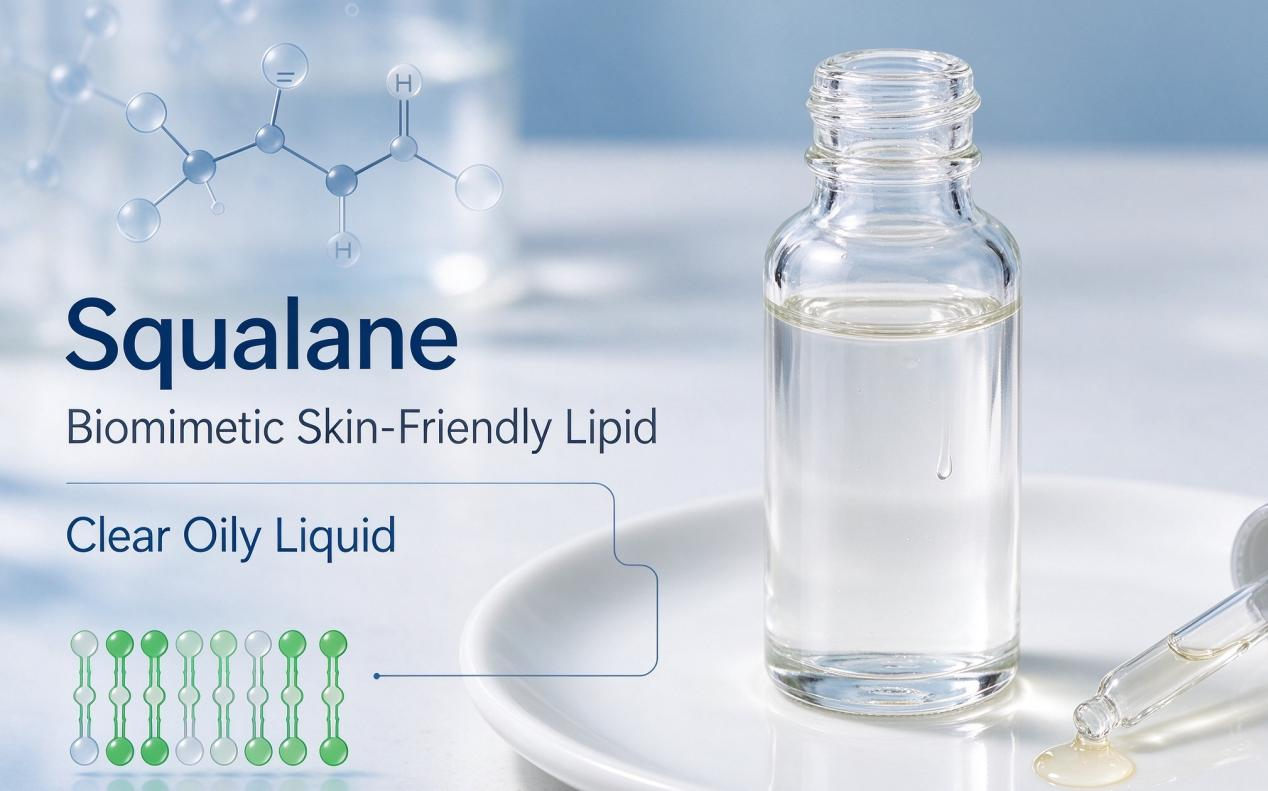
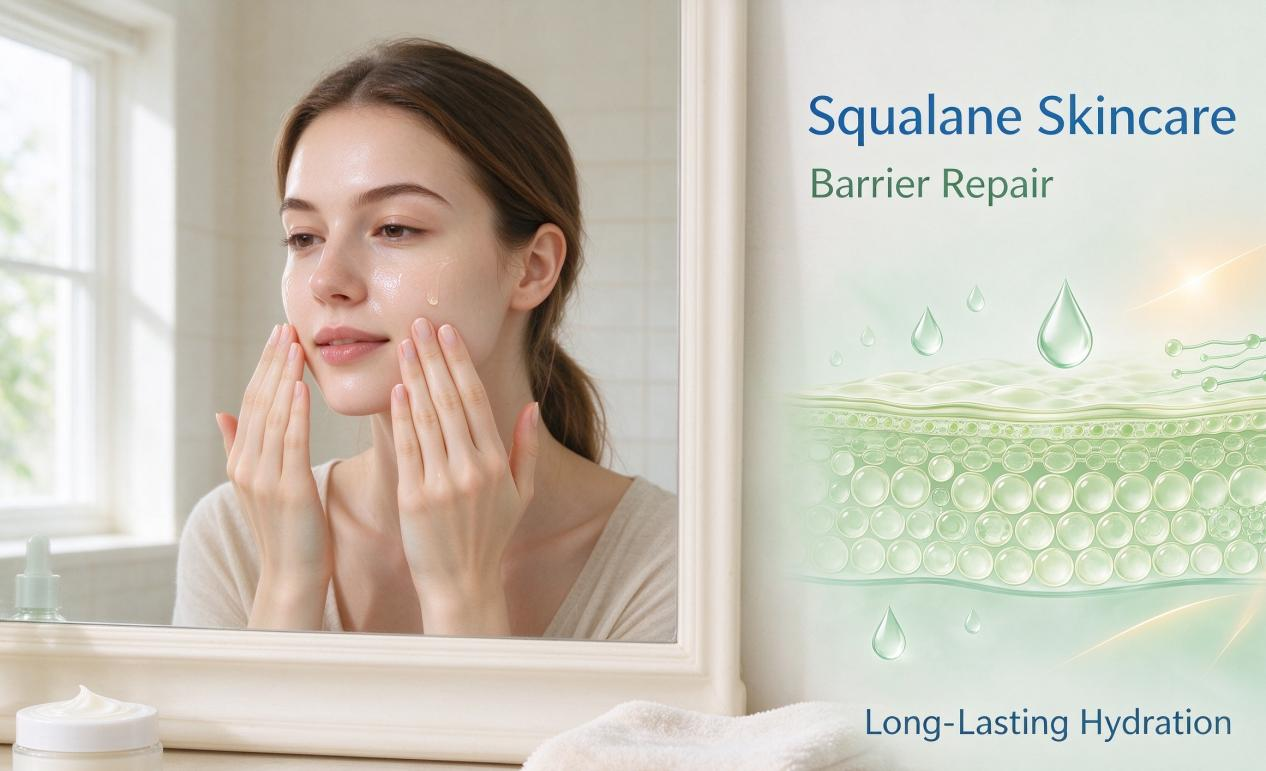
Squalane is a stable saturated lipid, the hydrogenated form of squalene, which naturally exists in human sebum. It appears as colourless transparent oily liquid at room temperature. Unlike squalene which contains double bonds and is easy to oxidize and go rancid, squalane owns saturated molecular structure with excellent oxidation stability. Known as the “biomimetic skin‑friendly lipid”, squalane’s molecular structure is highly consistent with human skin surface lipids. It plays a vital role in repairing skin barrier and locking skin moisture. One of the key functions of squalane is skin barrier reinforcement. It can blend well with intercellular lipids of epidermis, fill tiny gaps between skin cells and reduce transepidermal water loss. This protection process is especially important for sensitive and dry skin which suffers impaired barrier function. Squalane helps the skin rebuild intact lipid barrier and keeps long‑lasting hydration status.
In addition to its moisturizing and barrier‑repairing abilities, squalane also plays a vital role in resisting oxidative stress. It can neutralize partial free radicals generated by UV exposure and external irritation, easing oxidative damage to dermal cells. It also delivers mild anti‑inflammatory effects to soothe uncomfortable redness caused by external stimulus. Squalane supports cell membrane health and helps relieve skin discomfort.
Additionally, squalane brings comprehensive caring benefits for skin and hair, and it has become one of the most widely‑used cosmetic raw materials worldwide. It is lightweight, non‑greasy and non‑comedogenic, suitable for all skin types including oily, acne‑prone and sensitive skin. It softens rough skin texture, improves skin smoothness and elasticity. When applied for hair care, squalane penetrates hair cuticles, reduces hair dryness and split ends, adds natural shine for hair.
Although squalene (precursor of squalane) can be produced by human sebaceous glands, its secretion will gradually decrease with aging, long‑term UV radiation and bad living habits. In this case, external replenishment of squalane becomes necessary to maintain good skin condition. Plant‑derived squalane raw material can be formulated into many finished forms: facial oil, serum, cream, lotion, hair care oil and other personal‑care products.
In summary, squalane is a versatile biomimetic lipid that plays a vital role in maintaining skin and hair health. From barrier repair, long‑lasting moisturization, anti‑oxidation to soothing sensitive skin and hair nourishing, the benefits of squalane are far‑reaching. Adding appropriate squalane into daily skincare routines can bring multiple caring benefits for skin and hair.
For more info, plz contact:
Name: Cassie Huang
Tel/whatsapp: +8613008408548
email: lucy@lfherb.com
Post time: Oct-31-2026