

You may have come across the term locust bean gum in food‑ingredient discussions in recent years. But what exactly is locust bean gum? How does it differ from tara gum, xanthan gum and carrageenan?
Locust bean gum, also known as carob bean gum, is a galactomannan polysaccharide extracted from seed endosperm of carob tree (Ceratonia siliqua) originating in the Mediterranean region. It appears as white‑to‑off‑white fine powder, odorless and tasteless.
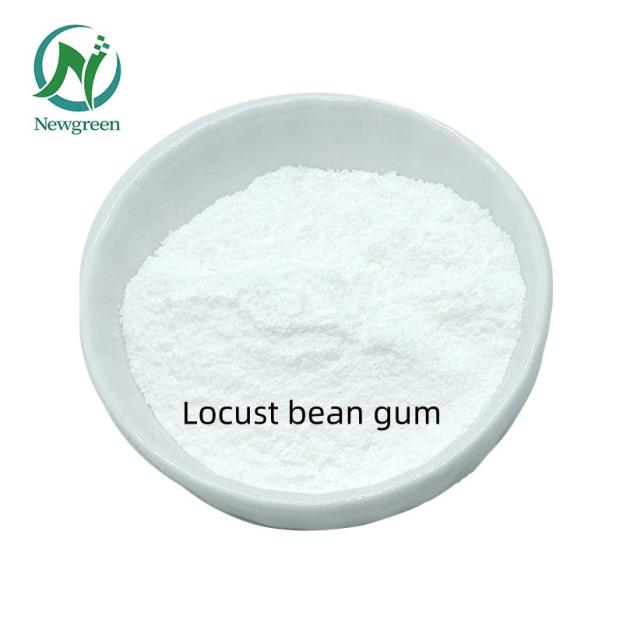
Its biggest strength lies in powerful synergistic effects. Alone it does not form strong gels, but blended with xanthan gum or kappa‑carrageenan, it builds elastic, flexible gel networks, reduces brittleness and prevents water separation (syneresis) in finished food products. It delivers excellent water‑binding performance, restrains ice‑crystal growth and stabilizes texture across broad pH and salt conditions.
Locust Bean Gum vs Tara Gum: Both need hot‑water dissolution and have good gel synergy. Tara gum comes from South‑American tara tree. Tara gum has slightly higher cold‑swelling capacity; LBG creates more elastic gels when compounded with carrageenan. Choose LBG if you need springy gel texture in dairy desserts; choose tara gum for cost‑sensitive frozen‑food formulas.
Locust Bean Gum vs Xanthan Gum: Xanthan dissolves easily in cold water, provides high viscosity and suspension ability by itself, but forms slimy texture at high dosage. Pick xanthan for cold‑process sauces, salad dressings and ready‑to‑drink beverages without heating equipment. Pick locust bean gum when you need elastic gel by mixing with carrageenan/xanthan for puddings and ice‑cream.
Locust Bean Gum vs Kappa‑Carrageenan: Carrageenan can form firm gel on its own with potassium ions, yet pure carrageenan gel is brittle and prone to water separation. Use pure carrageenan for firm, crisp jelly candy. Blend carrageenan + locust bean gum, if you want soft, bouncy, non‑brittle gel for dairy‑based jellies and flans.
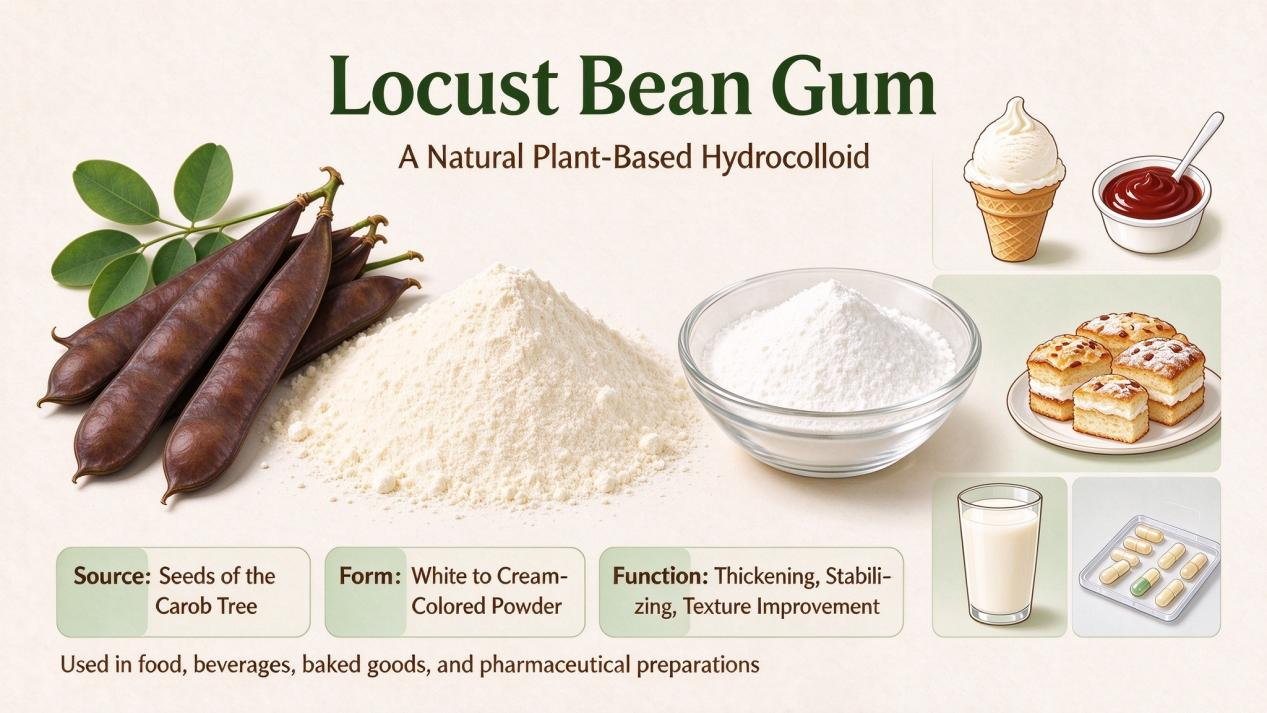
Locust bean gum brings multiple practical benefits for food production. It controls ice‑crystal growth in ice‑cream and frozen desserts, prevents whey separation in yogurt and cheese, improves moisture retention in bakery goods, and builds elastic gel texture in pudding and jelly.
In summary, locust bean gum is a high‑performance natural food hydrocolloid. It is not a universal single‑use thickener, but shines as a synergistic partner. Select locust bean gum when your target is elastic gel structure, minimal syneresis and stable frozen‑food texture.
For more info, plz contact:
Name: Cassie Huang
Tel/whatsapp: +8613008408548
email: lucy@lfherb.com
Post time: Nov-04-2026