

Food Grade Cellulase: Fermented Food Processing Enzyme to Optimize Plant-Based Food Manufacturing
Food grade cellulase is widely applied in fruit and vegetable processing, baking, brewing, botanical extraction and plant-based food production. But what exactly is food grade cellulase, and what processing value does it bring to the food industry? Let’s take a closer look at this commonly used food-grade enzyme preparation.
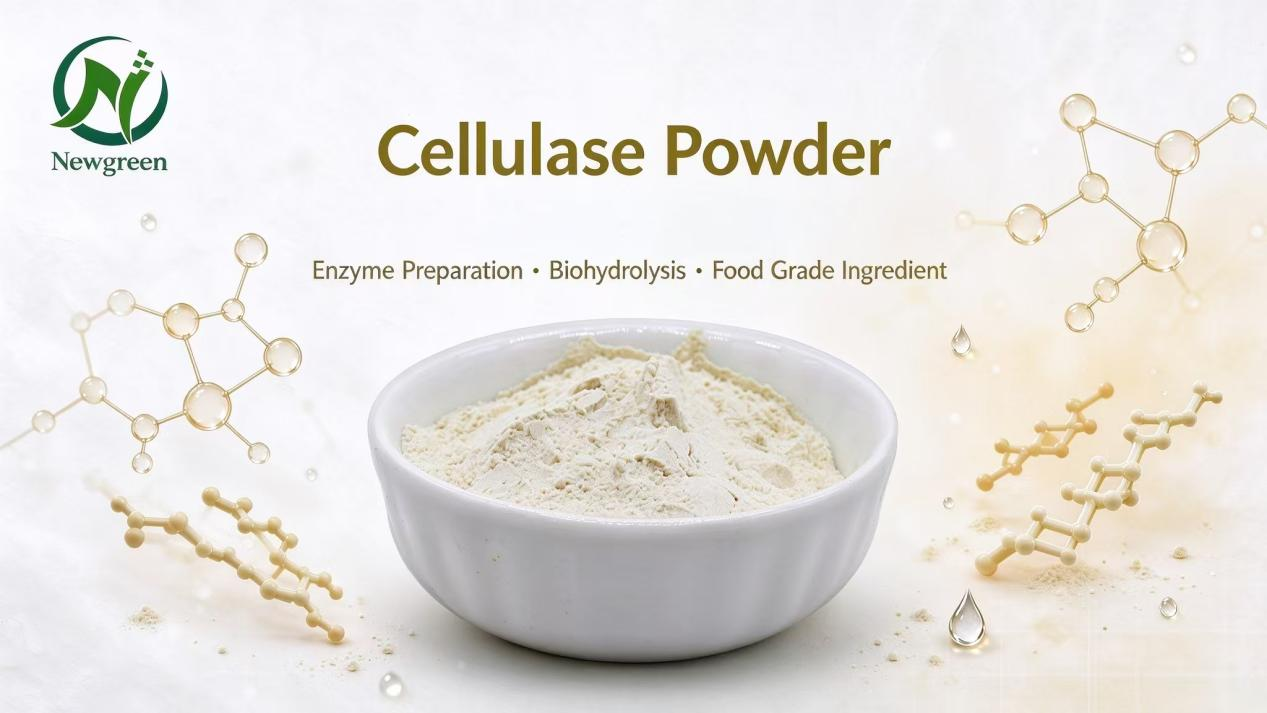
Food grade cellulase is a compound enzyme system produced by safe microbial fermentation, mainly composed of endoglucanase, exoglucanase and β-glucosidase. It selectively hydrolyzes cellulose, the structural polysaccharide that forms plant cell walls. As a food processing aid complying with global food safety standards, it delivers targeted catalytic activity under mild reaction conditions and shows good compatibility with other food enzymes such as pectinase and hemicellulase. It serves as an essential bio-ingredient to improve the processing performance of plant-derived raw materials.
A key advantage of food grade cellulase is its ability to break down plant cell walls and improve raw material utilization during manufacturing. In fruit and vegetable juice production, it decomposes cellulose structures to reduce pulp viscosity, increase juice yield, speed up filtration and help obtain clearer juice products. In botanical extraction processes, it helps release bioactive substances locked inside plant cells, including polyphenols, carotenoids and flavonoids, improving the extraction rate and utilization of plant raw materials. For whole-grain baked goods, it modifies tough dietary fiber during dough preparation, optimizes dough handling properties and improves bread volume and texture, without affecting food safety.
Food grade cellulase also helps optimize production workflows and supports more sustainable food manufacturing. It can shorten processing time, lower energy consumption and reduce raw material waste in juice pressing, grain processing and brewing. In wine and beer fermentation, it facilitates maceration, supports the release of color and flavor compounds, and helps stabilize beverage quality. As a fermentation-derived enzyme preparation, it fits clean-label trends and meets market demand for food production with fewer chemical processing aids.
Cellulose naturally exists in all plant foods, but human digestive tracts cannot produce sufficient endogenous cellulase to fully break it down. Food manufacturers add standardized food grade cellulase at controlled dosage during production only, to unlock the processing potential of plant raw materials. As a food processing aid, cellulase generally loses activity or is removed in subsequent processing steps. When used within regulated dosage limits, it is safe and stable. It is widely adopted in fruit juices, whole-grain bakery products, fermented alcoholic beverages, botanical extracts and plant-based food production.
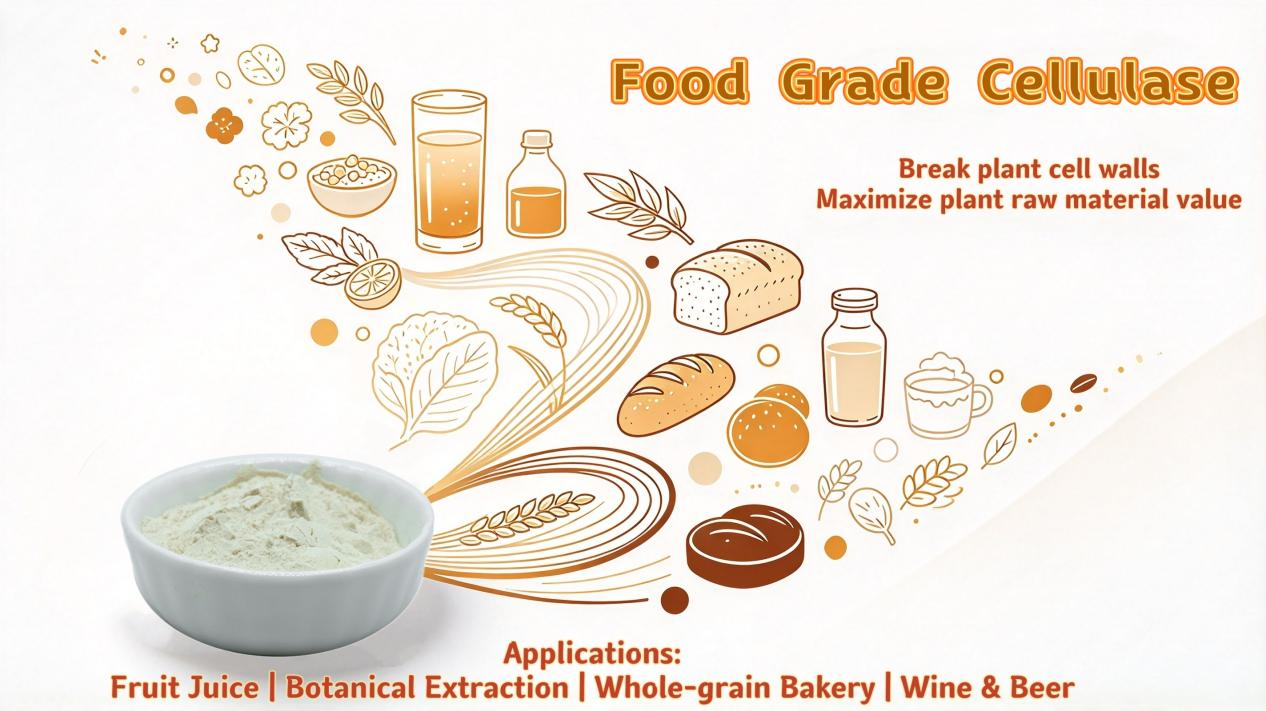
In summary, food grade cellulase is a multi-functional fermented enzyme preparation. It improves extraction efficiency, optimizes food texture and raw material utilization, and supports greener food manufacturing. With broad applicability across multiple food categories, proper use of food grade cellulase assists food manufacturers in elevating product quality and maximizing the value of plant raw materials.
For more info, plz contact:
Name: Lulu
Tel/whatsapp: +86 15664780978
Email: lulu@lfherb.com
Post time: Oct-20-2026