

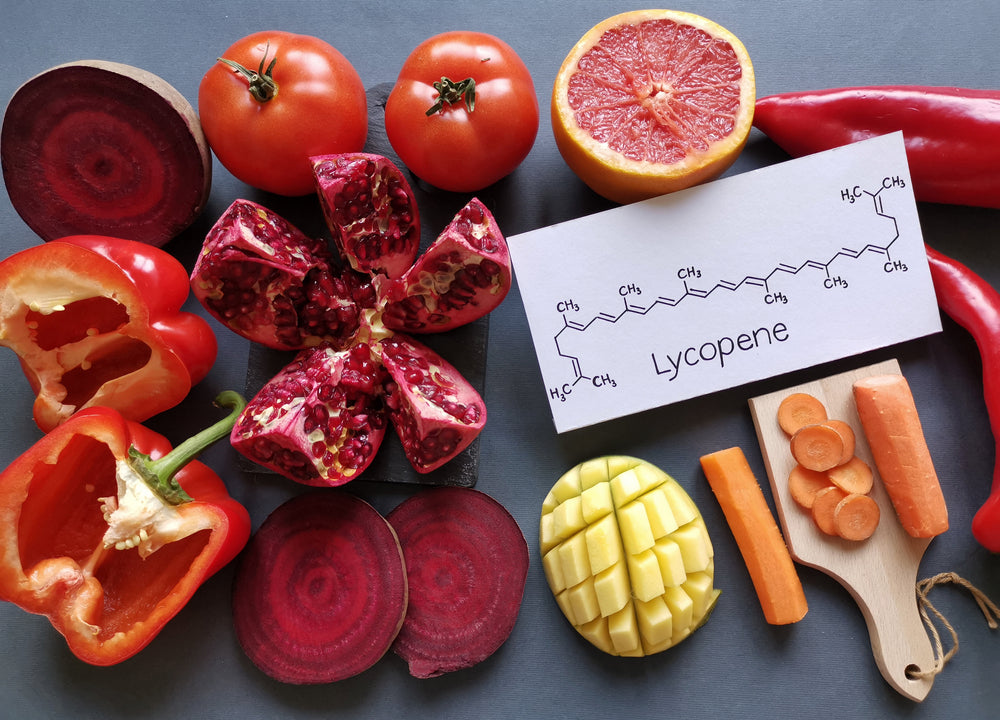
●What is Lycopene ?
Lycopene is a linear carotenoid with a molecular formula of C₄₀H₅₆ and a molecular weight of 536.85. It is naturally found in red fruits and vegetables such as tomatoes, watermelons, and guavas. Ripe tomatoes have the highest content (3-5 mg per 100 g), and its deep red needle-shaped crystals make it a golden source of natural pigments and antioxidants.
The core of lycopene’s efficacy comes from its unique molecular structure:
11 conjugated double bonds + 2 non-conjugated double bonds: giving it the ability to scavenge free radicals, and its antioxidant efficiency is 100 times that of vitamin E and 2 times that of β-carotene;
Fat-soluble characteristics: Lycopene insoluble in water, easily soluble in chloroform and oil, and needs to be eaten with fat to improve absorption rate;
Stability challenges: sensitive to light, heat, oxygen and metal ions (such as iron ions), easily degraded by light, and browned by iron, and nano-encapsulation technology is required to protect activity during processing.
Application tips: When cooking, chop tomatoes, stir-fry them at high temperature (within 2 minutes) and add oil to increase the release rate of lycopene by 300%; avoid using iron pans to prevent oxidation.
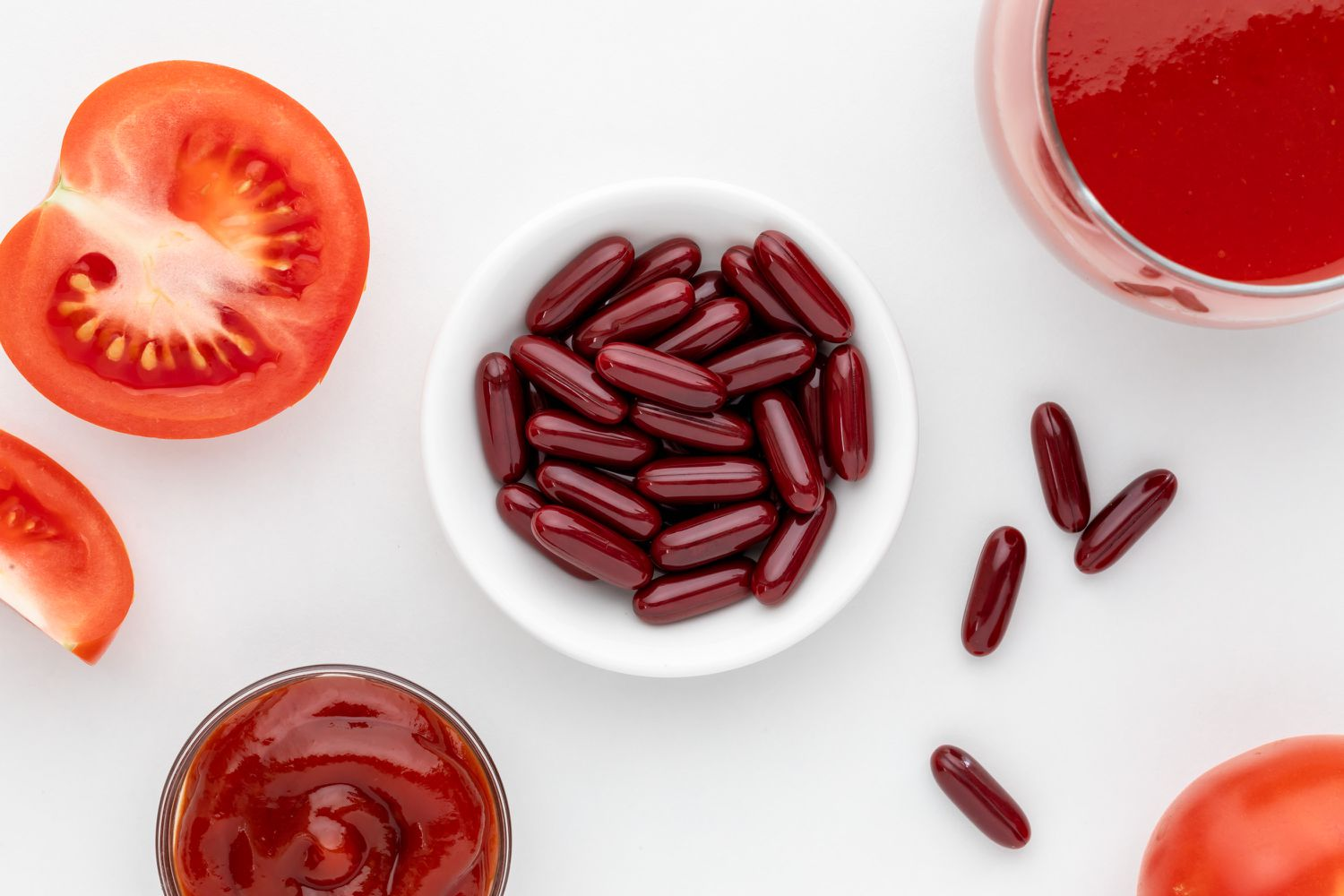
●What are the benefits of the Lycopene ?
Recent studies have revealed the multi-target health value of lycopene:
1. Anti-cancer pioneer:
Reduce the risk of prostate cancer by 45% (consume tomato products more than 10 times a week), the mechanism is to block the EGFR/AKT signaling pathway and induce cancer cell apoptosis;
Triple-negative breast cancer clinical trials show that the tumor inhibition rate exceeds 50%, especially for patients with high expression of ERα36.
2. Heart and brain guardian:
Regulate blood lipids: reduce the level of “bad cholesterol” (LDL). A Dutch study found that the lycopene content in patients with myocardial infarction is 30% lower than that in healthy people;
Delay brain aging: A 2024 study in “Redox Biology” confirmed that elderly mice supplemented with lycopene for 3 months had improved spatial memory and reduced neuronal degeneration.
3. Bone and skin protection:
Saudi experiments show that lycopene increases bone density in postmenopausal rats, stimulates estrogen secretion, and fights osteoporosis;
Ultraviolet protection: Oral administration of 28 mg/day can reduce the area of ultraviolet erythema by 31%-46%, and the compound nano-microcapsule technology used in sunscreen doubles the efficacy.
●What Are The Applications Of Lycopene ?
1. Functional food
Lycopene soft capsules, anti-glycation oral liquid
The recommended daily dose for Chinese adults is 15 mg, and customized dosage forms with a repurchase rate of over 50% are popular
2. Pharmaceutical preparations
Adjuvant treatment drugs for prostate cancer, cardiovascular disease prevention capsules
The price of high-purity pharmaceutical grade (≥95%) products is three times that of food grade
3. Cosmetics
24-hour photodamage protection cream, anti-aging essence
Nanotechnology solves the problem of photodegradation, adding 0.5%-2% can reduce the depth of wrinkles by 40%
4. Emerging scenarios
Anti-aging food for pets, agricultural biostimulants
The North American pet market has increased by 35% annually, and can replace antibiotics
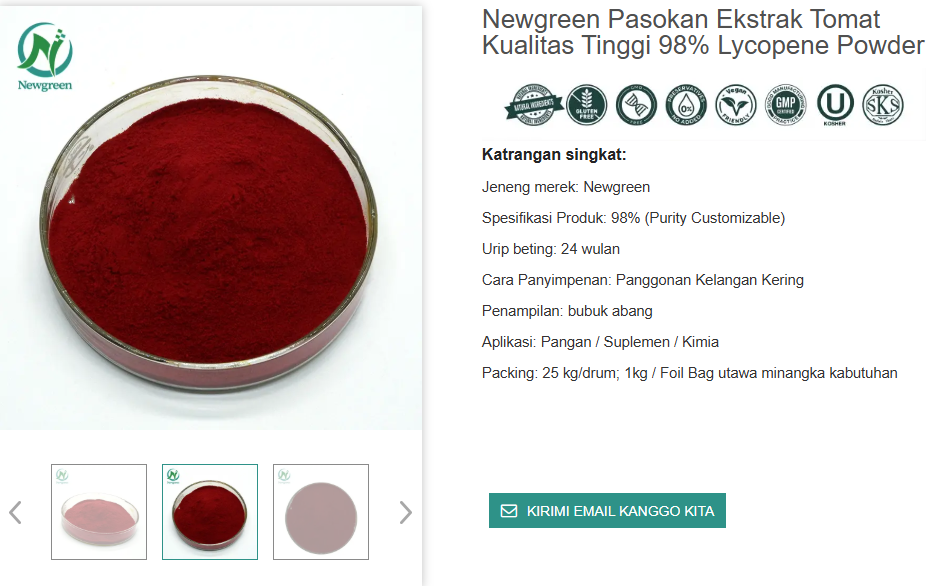
●NEWGREEN Supply Lycopene Powder
Post time: Jun-18-2025


