

What is glucosidase?
Glucosidase is one of the most widely used enzyme families in food processing, it appears on the technical sheet of fruit juices, wines, syrups and sweeteners. So what exactly is it, and what does it actually do?
ⓘ
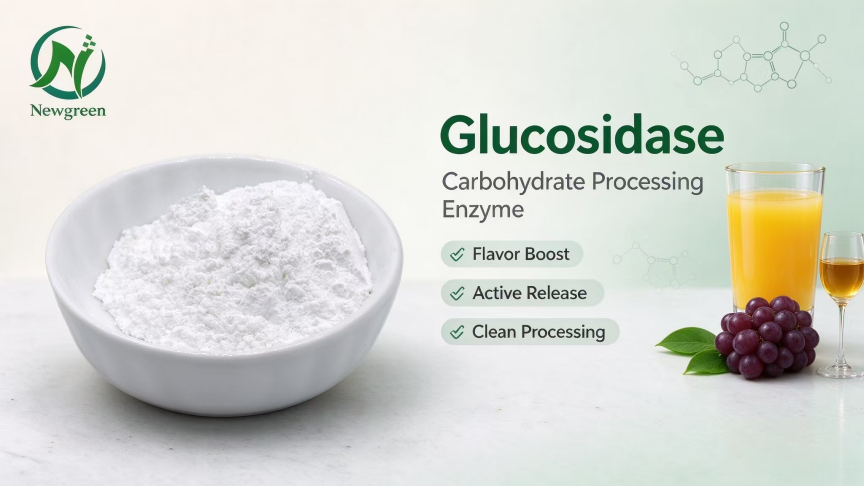
Food grade glucosidase is a type of glycoside hydrolase, with β-glucosidase being the most widely used one for food. It is made by fermenting safe, approved microbes. It targets and breaks certain glycosidic bonds, releasing glucose and active substances locked inside glycosides. It works well at mild temperatures and pH levels, and teams up nicely with other food enzymes like pectinase, cellulase and amylase. Recognized as a safe processing aid under international food safety rules, it helps manufacturers adjust the flavour, solubility and activity of raw materials rich in carbs.
✓
Key Strengths & Applications
Its biggest strength is controlled hydrolysis of glycosides, so we can get more value out of their raw materials. When processing fruits and vegetables, it unlocks trapped aroma compounds to bring out richer natural fruit scent, and helps keep fruit juice clear without turning the pulp too mushy. For wine, fruit wine and tea drinks, it frees up hidden flavour molecules to build a fuller smell and taste, no harsh chemicals needed. When making plant extracts, it turns glycoside-bound flavonoids and polyphenols into forms that our bodies can absorb more easily, boosting the yield of useful actives such as ginsenosides and resveratrol. It also helps with starch saccharification to raise glucose output and tweak syrup sweetness, and can cut bitter compounds in citrus and other plants for a smoother taste.
Food grade glucosidase also simplifies production and supports greener manufacturing. It speeds up reactions, so we don’t have to rely heavily on strong acids, alkalis or long high-heat treatment. That saves energy and protects delicate flavours and nutrients that break down easily under heat. Enzymatic hydrolysis creates far fewer unwanted side products and less discolouration than chemical methods. It fits well with the clean-label trend, matching consumer demand for fewer synthetic additives. You can find it used in clear fruit juices, fermented wines, natural plant extracts, modified starch syrups, functional drinks and less bitter plant-based ingredients.
Glucosidase is useful outside food production too. In biochemistry labs, researchers use it to study carbohydrate structures. For cosmetic raw materials, it helps turn plant glycosides into gentle, skin-beneficial actives for antioxidant and calming formulas. It also plays a role in biorefinery work, breaking down plant fibre to reuse biomass.
Summary
Simply put, glucosidase is a specific glycoside hydrolase. It selectively splits glycosidic bonds, brings out better flavour, improves the absorption of active ingredients and boosts raw material usage. If dosed and applied properly, it helps food makers keep steady quality and gain more value from plant and carbohydrate raw materials.
Post time: Nov-16-2026