

•What Is Chitosan ?
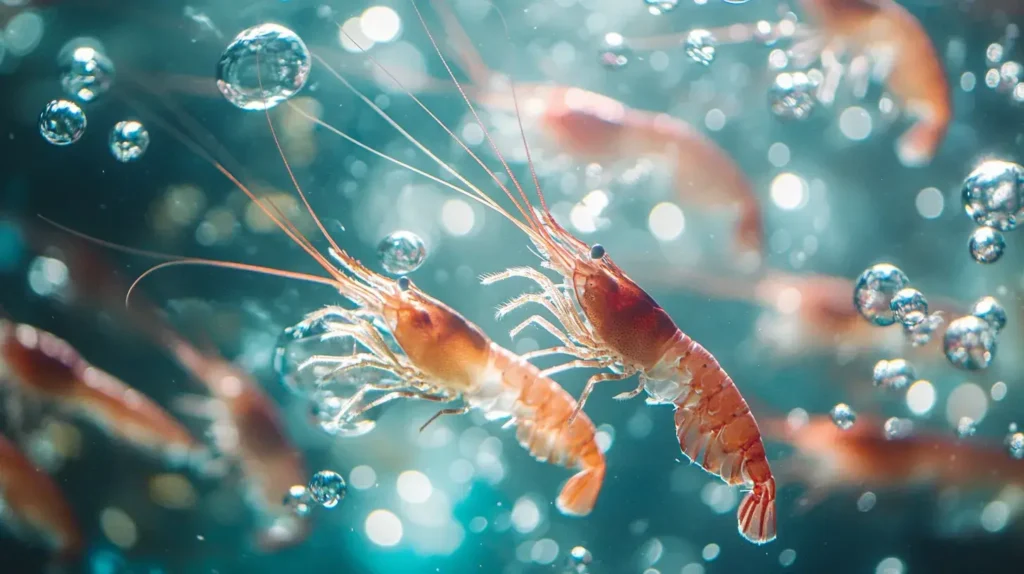
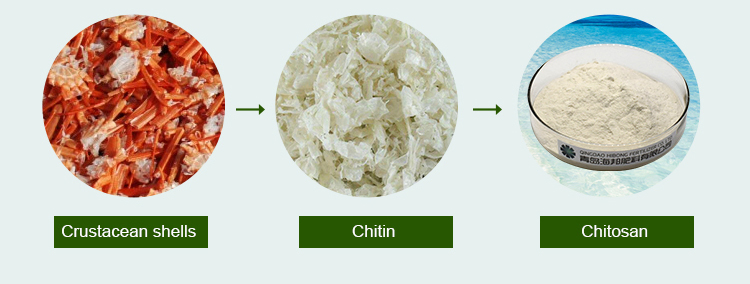
Chitosan (CS) is the second largest natural polysaccharide in nature, mainly extracted from the shells of crustaceans such as shrimp and crab. Its basic raw material chitin accounts for up to 27% of shrimp and crab processing waste, and the global annual output exceeds 13 million tons. Traditional extraction requires three processes: acid leaching decalcification (dissolving calcium carbonate), alkaline boiling to remove protein, and 40-50% concentrated alkali deacetylation, and finally obtains a white solid with a deacetylation degree of more than 70%.
Breakthroughs in recent years are the development of fungal chitosan: chitosan extracted from fungi such as Ganoderma lucidum by enzymatic method has a deacetylation degree of more than 85%, a molecular weight of only 1/3 of that from shrimp and crab (about 8-66kDa), and does not contain allergenic proteins, and cell compatibility is significantly improved7. The team of the Chinese Academy of Agricultural Sciences verified that the fungus-chitosan hybrid extraction method can control the molecular weight deviation within ±5%, solving the problem of seasonal fluctuations in marine raw materials.
•What Are The Benefits Of Chitosan ?
The core competitiveness of chitosan comes from the free amino and hydroxyl groups on its molecular chain, forming a unique “molecular toolbox”:
Intelligent Responsiveness: amino protonation allows chitosan to dissolve in an acidic environment, achieving pH-controlled release (such as the release efficiency of the anticancer drug doxorubicin at pH 5.0 in the tumor microenvironment is 7.3 times that of the physiological environment);
Biological Adhesion: positive charge combines with negative charge of the mucosa to prolong the retention time of the drug in the oral cavity and gastrointestinal tract, and the mucosal adhesion is increased by 3 times after thiolation modification;
Ecological Synergy: Chitosan can be completely degraded by lysozyme (high deacetylation sample loses 78% weight in 72 hours), and the degradation products participate in the soil carbon and nitrogen cycle.
The Antibacterial Mechanism Is Particularly Prominent: low molecular weight chitosan destroys the integrity of bacterial membranes, and the diameter of the inhibition zone for Escherichia coli and Staphylococcus aureus is 13.5mm; its antioxidant capacity can also neutralize the reactive oxygen produced by pesticide stress, reducing the malondialdehyde content of spinach treated with chlorpyrifos by 40%.
•What Are The Application Of Chitosan ?
1. Biomedicine: From Sutures To Mrna Vaccine Guardians
Intelligent delivery system: The transfection efficiency of CS/pDNA nanocomplex is 2 orders of magnitude higher than that of liposomes, becoming a new favorite of non-viral gene carriers;
Wound repair: Ganoderma lucidum chitosan-glucan composite gel shortens the coagulation time by 50%, and the three-dimensional porous structure accelerates the regeneration of granulation tissue;
Vaccine stability: Chitosan freeze-dried protective agent makes the activity retention rate of mRNA vaccine exceed 90% at room temperature, solving the problem of cold chain transportation.
2. Green Agriculture: The Ecological Key To Reducing Fertilizer Use
Chitosan-coated controlled-release fertilizers (CRFs) increase efficiency through triple mechanisms:
Targeted release: Graphene oxide/chitosan nanofilms continuously release nitrogen for 60 days in acidic soil, and the utilization rate is 40% higher than that of sulfur-coated urea;
Crop stress resistance: Inducing plants to synthesize chitinase, tomato yield increased by 22%, while reducing the rate of O₂⁻ production;
Soil improvement: Increase organic matter content by 1.8 times, expand actinomycete communities by 3 times, and completely degrade within 60 days without residue.
3. Food Packaging: The Preservation Revolution Of Insect Protein Composite Film
The innovation team of the Chinese Academy of Agricultural Sciences combined chitosan with mealworm protein and loaded propolis ethanol extract:
Mechanical properties: tensile strength increased by 200%, and water vapor barrier reached 90% of petroleum-based films;
Antibacterial activity: the antibacterial rate of strawberry spoilage bacteria exceeded 99%, the shelf life was extended to 14 days, and the biodegradation rate was 100%.
4. Textile Printing And Dyeing: a Natural Solution For Antistatic Polyester
Through alkali reduction treatment, pits and carboxyl groups are formed on the polyester surface. After chitosan is cross-linked with tartaric acid:
Permanent antistatic: the resistivity is reduced from 10¹²Ω to 10⁴Ω, and the moisture regain remains at 6.56% after 30 washes;
Heavy metal adsorption: Cu²⁰ chelation efficiency in printing and dyeing wastewater is >90%, and the cost is 1/3 of synthetic resin.
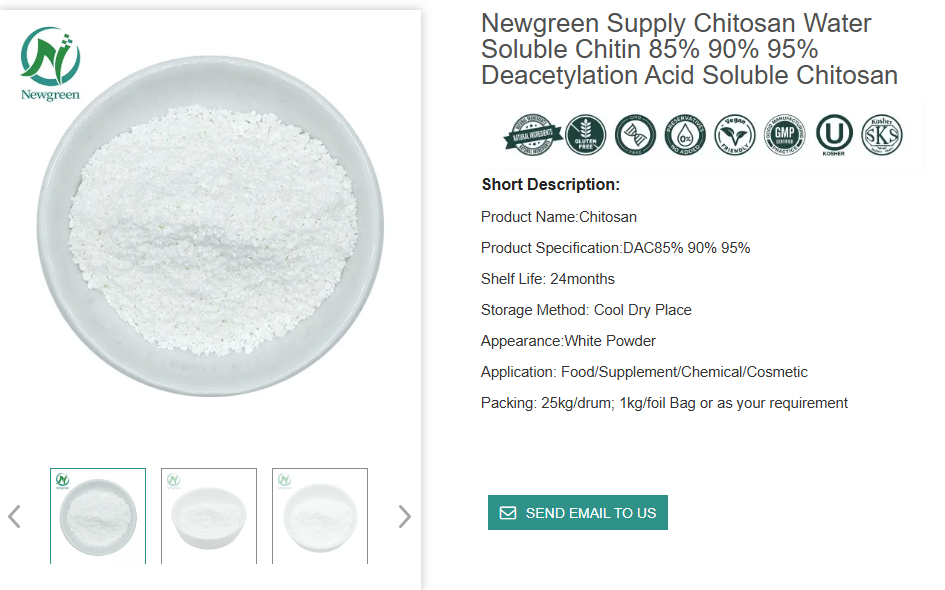
•NEWGREEN Supply High Quality Chitosan Powder
Post time: Jul-03-2025


